
Fuelling the Comeback
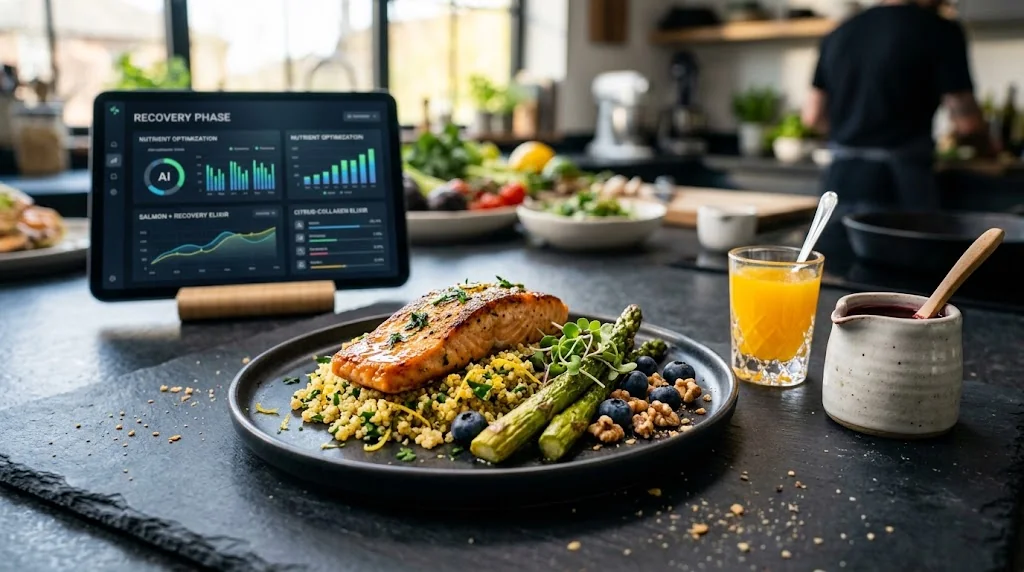
Hamstring injuries are the most common muscle injury in professional football. In a study that followed 51 teams between 2001 and 2009, they made up about 37% of all muscle injuries (Ekstrand, Hägglund and Waldén, 2011). A 2020 statement paper in the British Journal of Sports Medicine reports the same split (Ishøi and colleagues, 2020).
To get a player back on the pitch safely, physical therapy must be paired with precise nutrition. Today, we worked with a professional footballer's executive chef to build a 24-hour recovery menu. By harnessing AI's range, scope, and creative precision, we synthesised complex biomolecular literature, spanning mTORC1 muscle signalling and mechanotransduction matrix remodelling, into an actionable, chef-ready culinary plan.
1. The core scientific pillars and food ingredients
Our AI-driven protocol targets two distinct biological systems at the same time: myofibrillar muscle protein synthesis within contractile muscle fibres, and connective tissue extracellular matrix synthesis within the myotendinous junction.
| What we are targeting | Nutritional focus |
|---|---|
| Contractile muscle fibres (mTORC1 pathway) | Leucine-rich protein |
| Myotendinous extracellular matrix (tendons) | Collagen plus vitamin C |
A. The pre-rehab collagen and vitamin C axis (connective tissue remodelling)
- The AI protocol: Take 15–25 g of hydrolysed collagen peptides (or gelatin) with 50–500 mg of vitamin C, strictly 30 to 60 minutes before physical therapy loading sessions.
- Key ingredients: Hydrolysed collagen powder or gelatin, fresh blood orange juice, citrus reductions, and berry purées.
- Biomolecular mechanism: Connective tissue and the myotendinous matrix have limited regional blood supply. When the athlete performs targeted loading (such as yielding isometric holds or eccentric sliders), matrix shear stress drives circulating glycine, proline, and hydroxyproline directly into the remodelling tissue via mechanotransduction. Vitamin C is a non-negotiable enzymatic co-factor required by prolyl hydroxylase to form the stable triple-helix structure of procollagen.
B. High-leucine complete proteins (combating muscle atrophy)
- The AI protocol: Maintain a daily intake of 1.6 to 2.5 g/kg/day, spread evenly into 20 to 35 g doses every 3 to 4 hours across 4 to 6 meals. Each dose must reach a threshold of 2.5 to 3.0 g of L-leucine.
- Key ingredients: Poached eggs, wild-caught salmon, grass-fed beef fillet, lean chicken breast, Greek yoghurt, and cottage cheese.
- Biomolecular mechanism: Immobilisation causes anabolic resistance in muscle tissue. High-leucine complete animal proteins directly trigger the mTORC1 signalling pathway, suppressing muscle protein breakdown and preserving lean muscle volume during modified loading phases.
C. Anti-inflammatory fats and polyphenols (managing secondary damage)
- The AI protocol: Supply 2 to 4 g/day of marine-derived omega-3 fatty acids (EPA/DHA) alongside bioavailable polyphenols.
- Key ingredients: Wild salmon, mackerel, walnuts, chia seeds, extra virgin olive oil, and Montmorency tart cherry juice concentrate.
- Biomolecular mechanism: Omega-3s generate specialised pro-resolving mediators (resolvins and maresins) that clear cellular debris and make cell membranes more sensitive to protein synthesis. Anthocyanins in tart cherry juice scavenge reactive oxygen species, reducing delayed-onset muscle soreness and speeding force recovery after exercise.
D. Complex carbohydrates and pre-sleep nightcaps
- Key ingredients: Steel-cut oats, sweet potatoes, quinoa, blueberries, and pre-sleep micellar casein or cottage cheese.
- Biomolecular mechanism: Low-to-moderate glycaemic complex carbohydrates replenish intramyocellular glycogen without causing hyperglycaemia-induced oxidative stress. A slow-digesting casein bolus before bed maintains positive nitrogen balance overnight.
2. Sample 24-hour AI-curated menu architecture
Our AI service translated these nutrient targets into a culinary schedule tailored for an 80 kg professional athlete in rehabilitation.
| Time | Event and focus | AI-designed culinary and supplement composition |
|---|---|---|
| 07:30 | Waking protein shift | 500 mL water + 30 g whey isolate hydrolysate with vitamin D3. |
| 08:30 | High-leucine breakfast | 3 poached eggs on sourdough toast, ½ avocado, 100 g fresh blueberries, 30 g walnuts, and 2 g omega-3 fish oil. |
| 10:00 | Pre-rehab collagen axis | 15–20 g hydrolysed collagen peptides blended into 200 mL freshly squeezed orange juice (about 100 mg vitamin C) + 5 g creatine monohydrate. |
| 11:00 | Physical therapy session | Focus on isometric hamstring holds and eccentric sliders to trigger mechanotransduction. |
| 12:30 | Post-rehab recovery lunch | 180 g pan-seared wild salmon fillet over 150 g citrus quinoa and roasted Mediterranean vegetables, drizzled with extra virgin olive oil. |
| 15:30 | Mid-afternoon snack | 200 g Greek yoghurt topped with crushed walnuts and a 30 mL Montmorency tart cherry reduction. |
| 18:30 | Evening remodelling meal | 200 g grass-fed beef fillet or grilled chicken breast, 200 g steamed sweet potato mash, and a large mixed green salad with olive oil dressing. |
| 21:30 | Pre-sleep nightcap | 250 g cottage cheese (or 40 g micellar casein) with 30 mL tart cherry concentrate. |
3. The creative power of AI in sports gastronomy
By bringing AI tools into the kitchen, executive chefs no longer have to guess how to balance clinical efficacy with culinary presentation. The range and scope of AI technology let performance staff:
- Calculate micronutrient synergies: Pair co-factors such as vitamin C with collagen, or fats with vitamin D3, for better absorption.
- Synchronise nutrient timing: Map meal arrivals precisely around physical therapy windows to maximise fluid transport into healing tissues.
- Customise flavour profiles: Generate chef-quality gourmet recipes that match the athlete's exact macro targets without compromising taste.
Allergen heads-up: this sample menu includes eggs, fish, nuts, milk and gluten. Always check each person's allergies and medical needs first. This article is for information only and is not medical advice.
References
Ekstrand J, Hägglund M, Waldén M. Epidemiology of muscle injuries in professional football (soccer). American Journal of Sports Medicine. 2011;39(6):1226-32. doi:10.1177/0363546510395879
Ishøi L, Krommes K, Husted RS, Juhl CB, Thorborg K. Diagnosis, prevention and treatment of common lower extremity muscle injuries in sport: grading the evidence. A statement paper commissioned by the Danish Society of Sports Physical Therapy (DSSF). British Journal of Sports Medicine. 2020;54(9):528. bjsm.bmj.com/content/54/9/528 Dosages, timings and mechanisms in the sample menu come from an AI-assisted research report: "Nutritional Protocols for Elite Professional Footballers Recovering from Hamstring Strain Injuries: A Mechanistic and Biomolecular Framework". The menu is an example, not a prescription.